Description
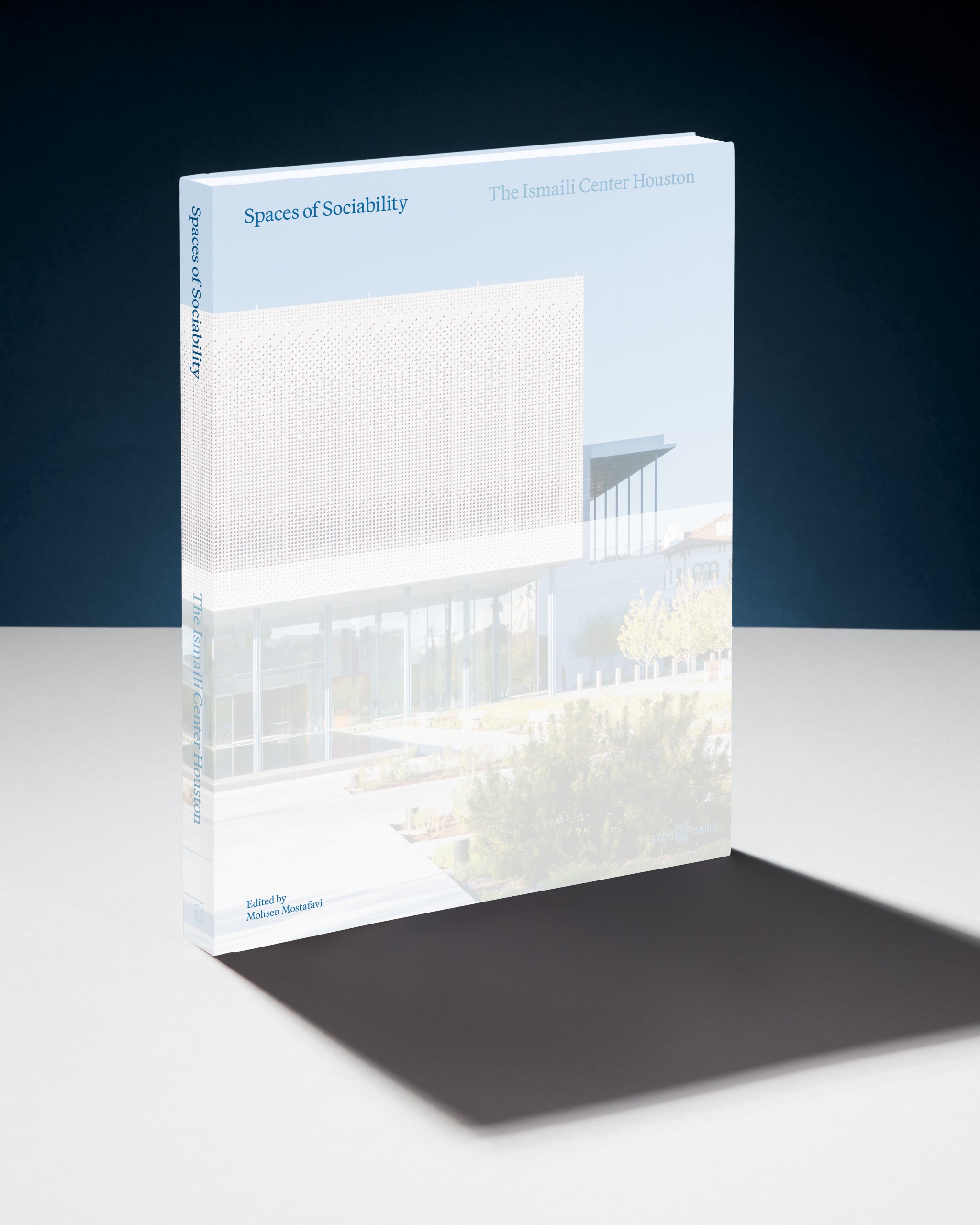
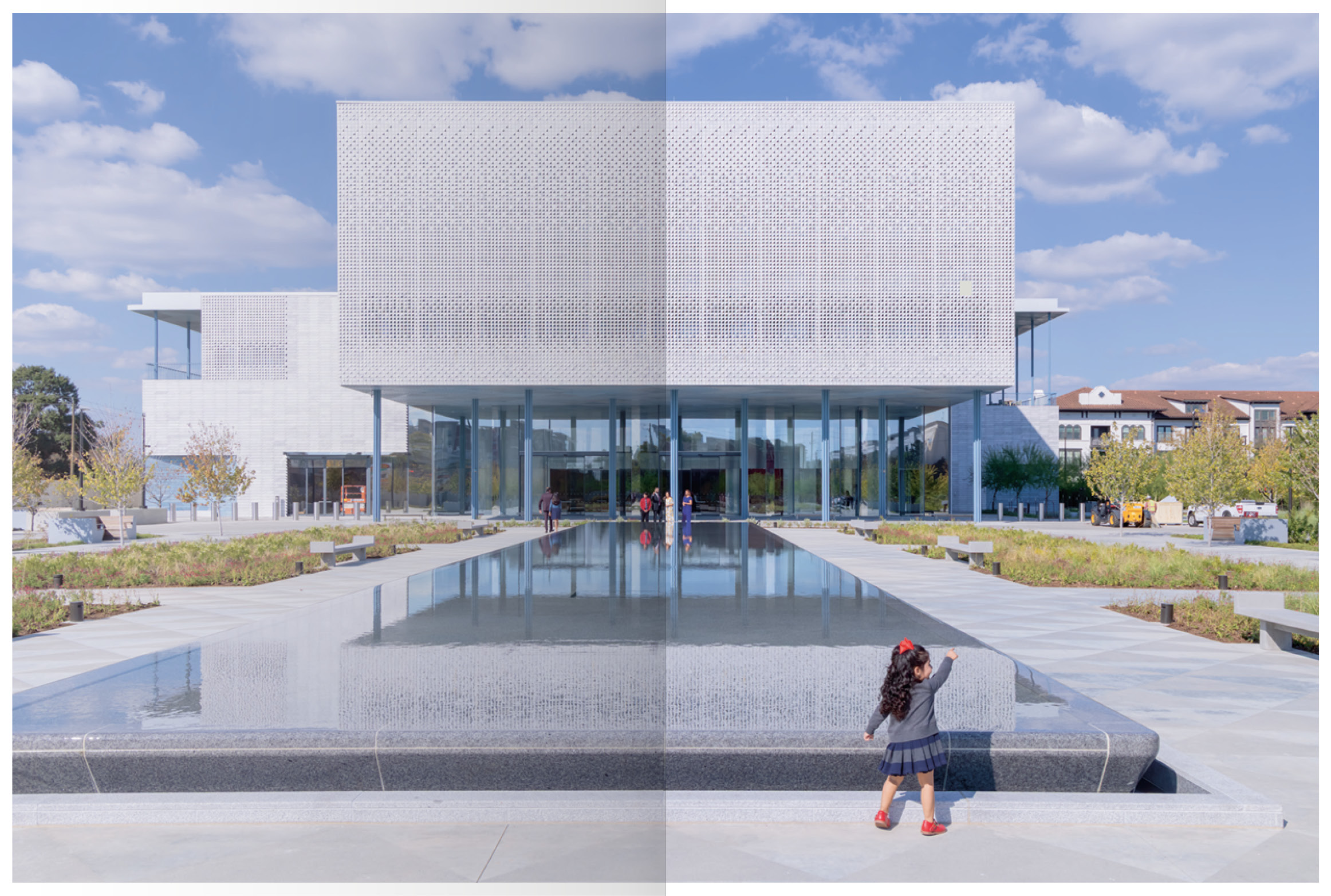
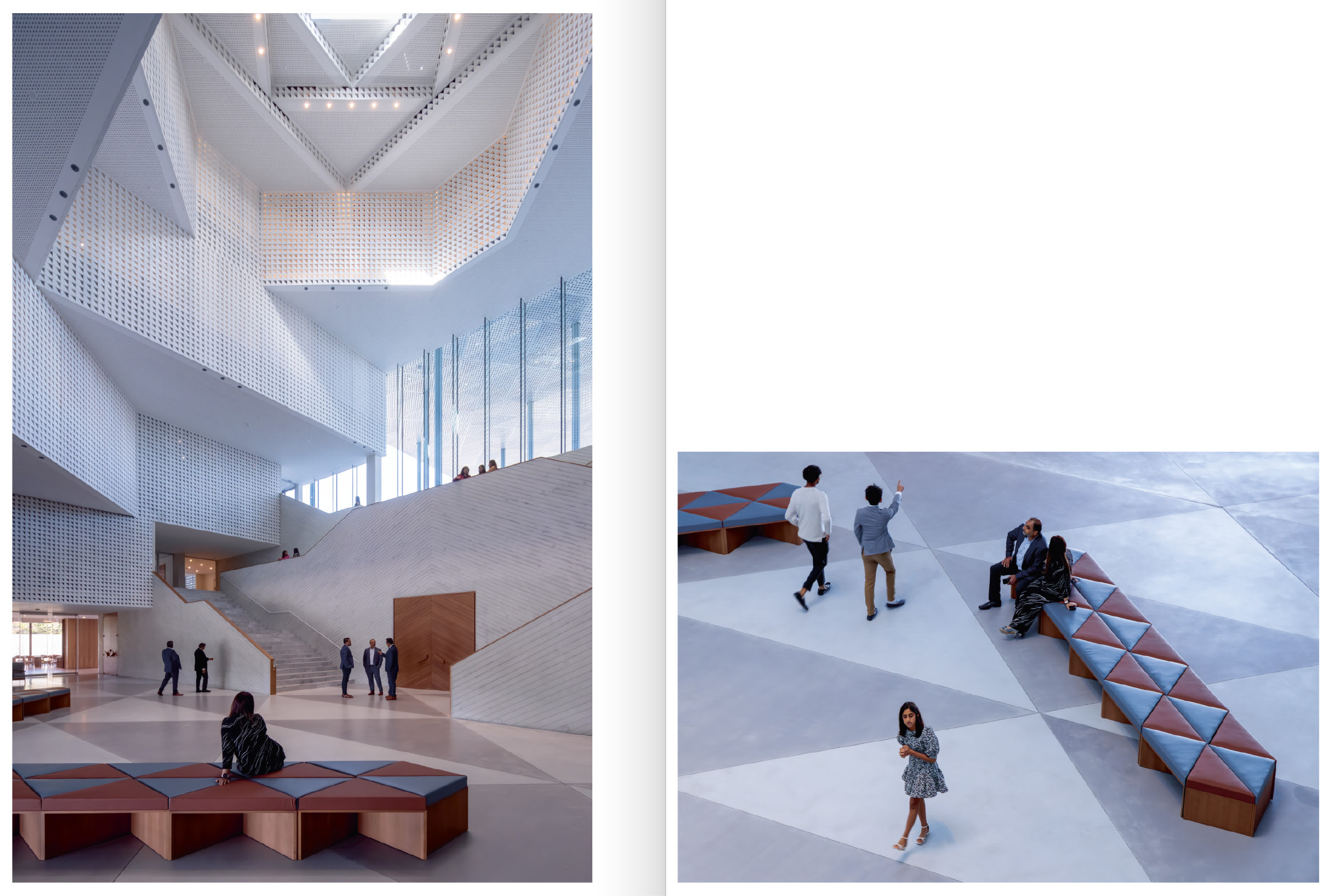
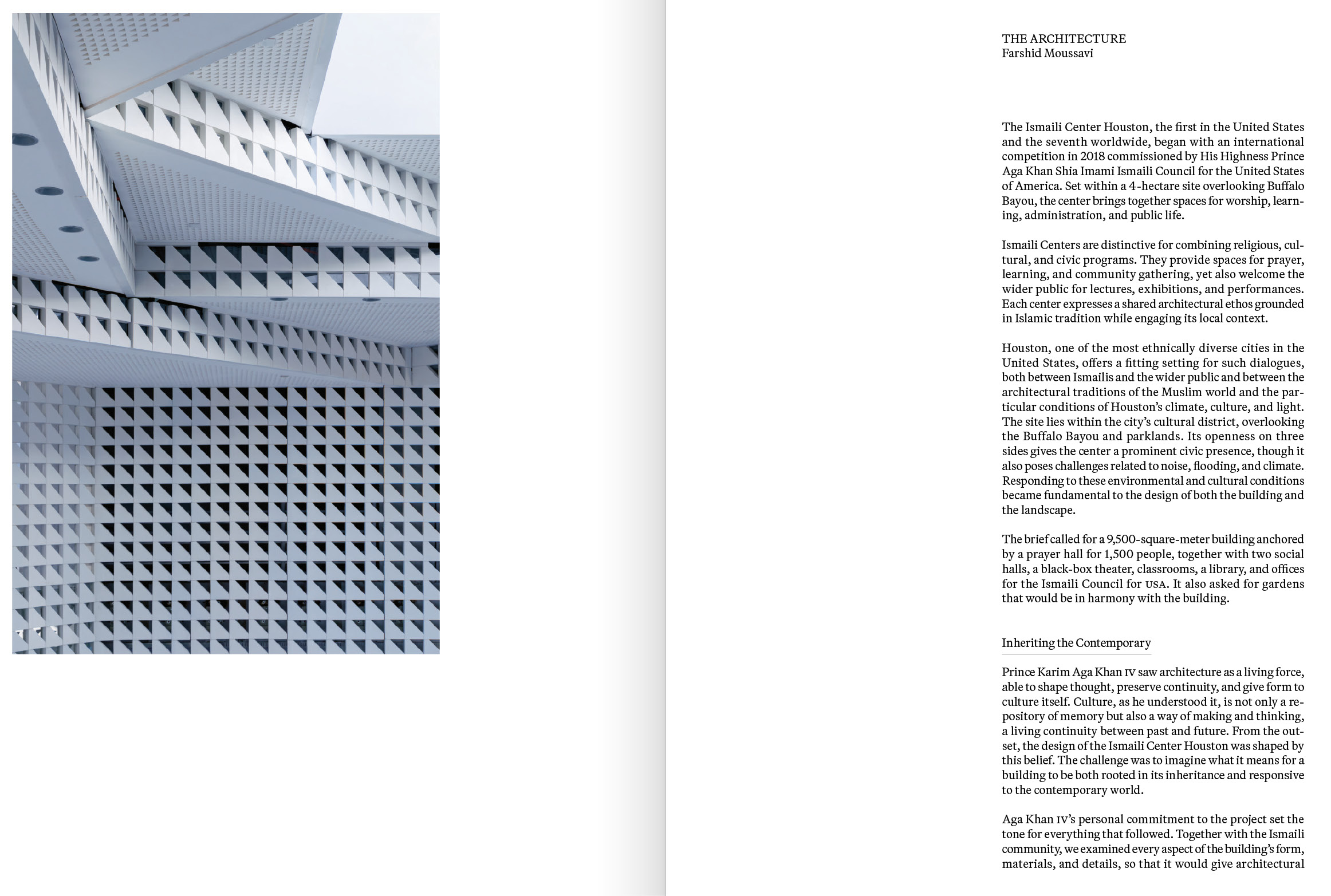
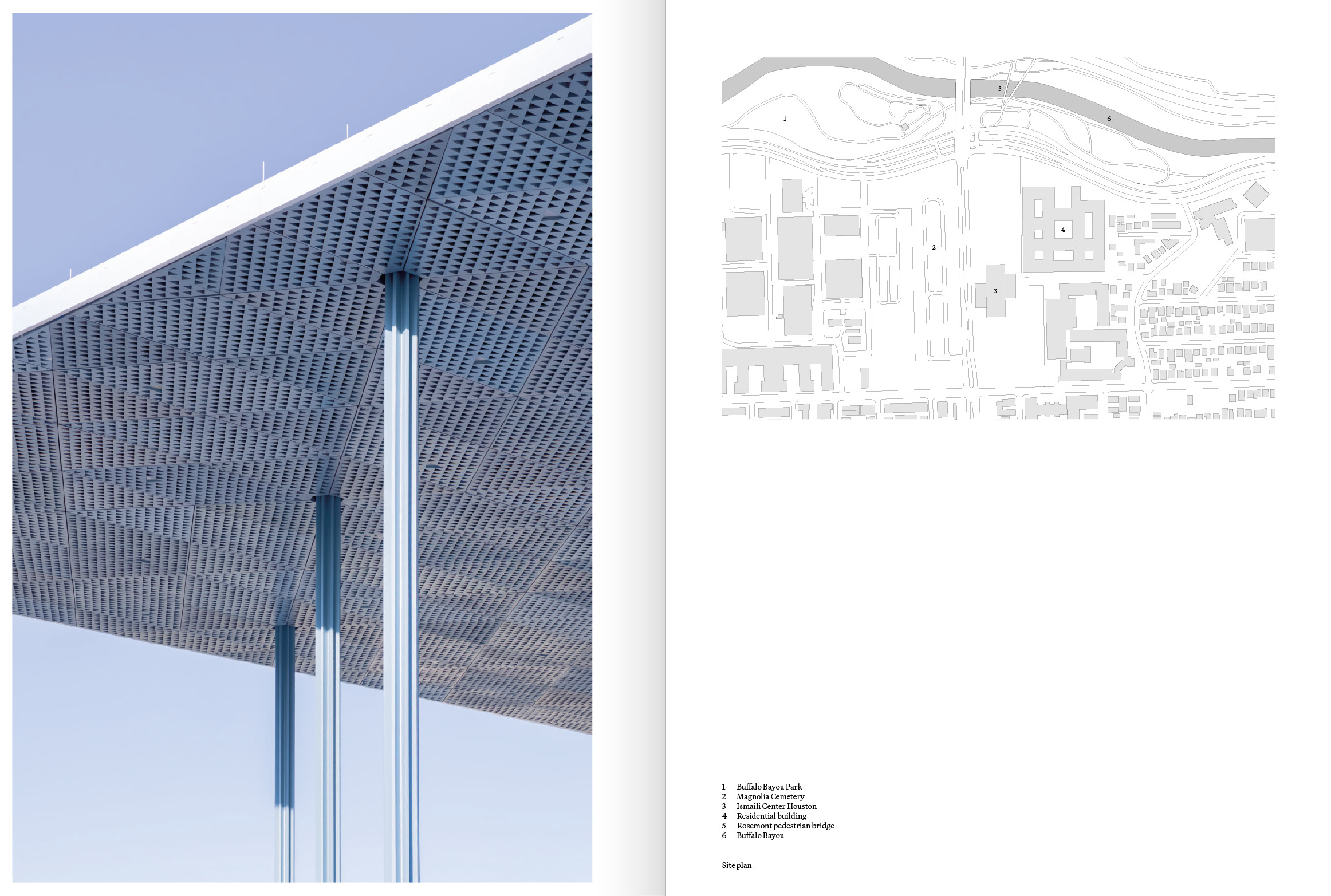
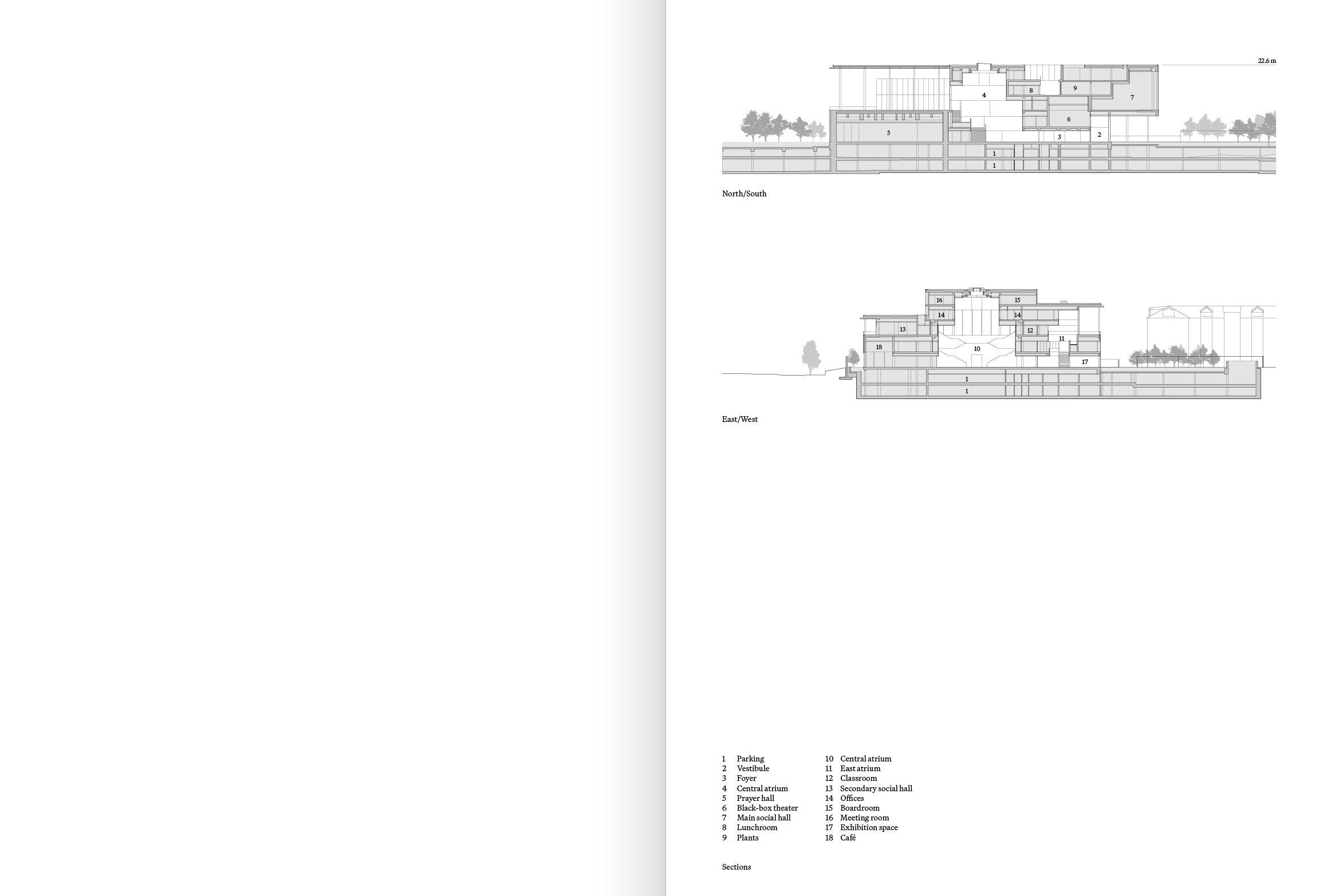
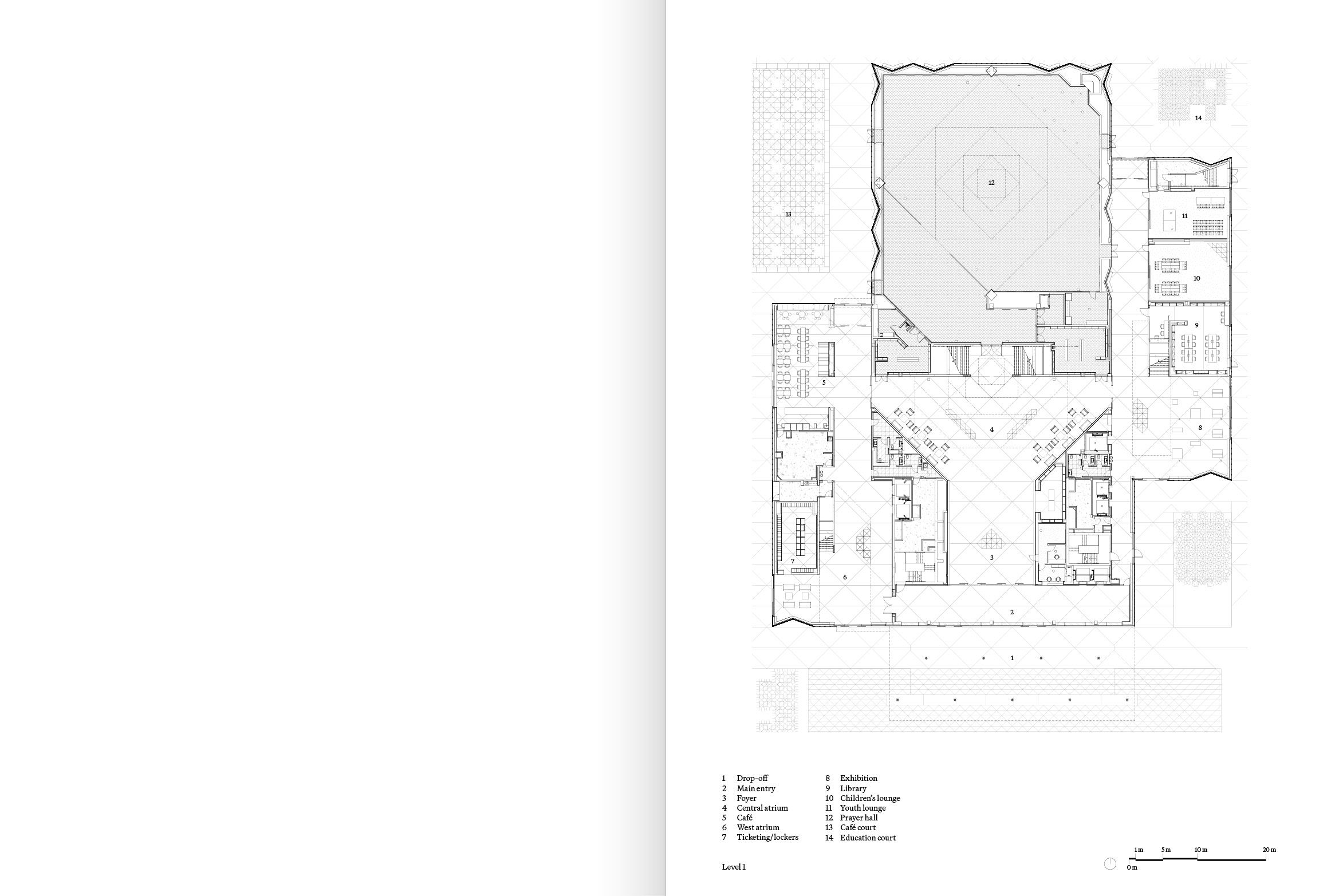
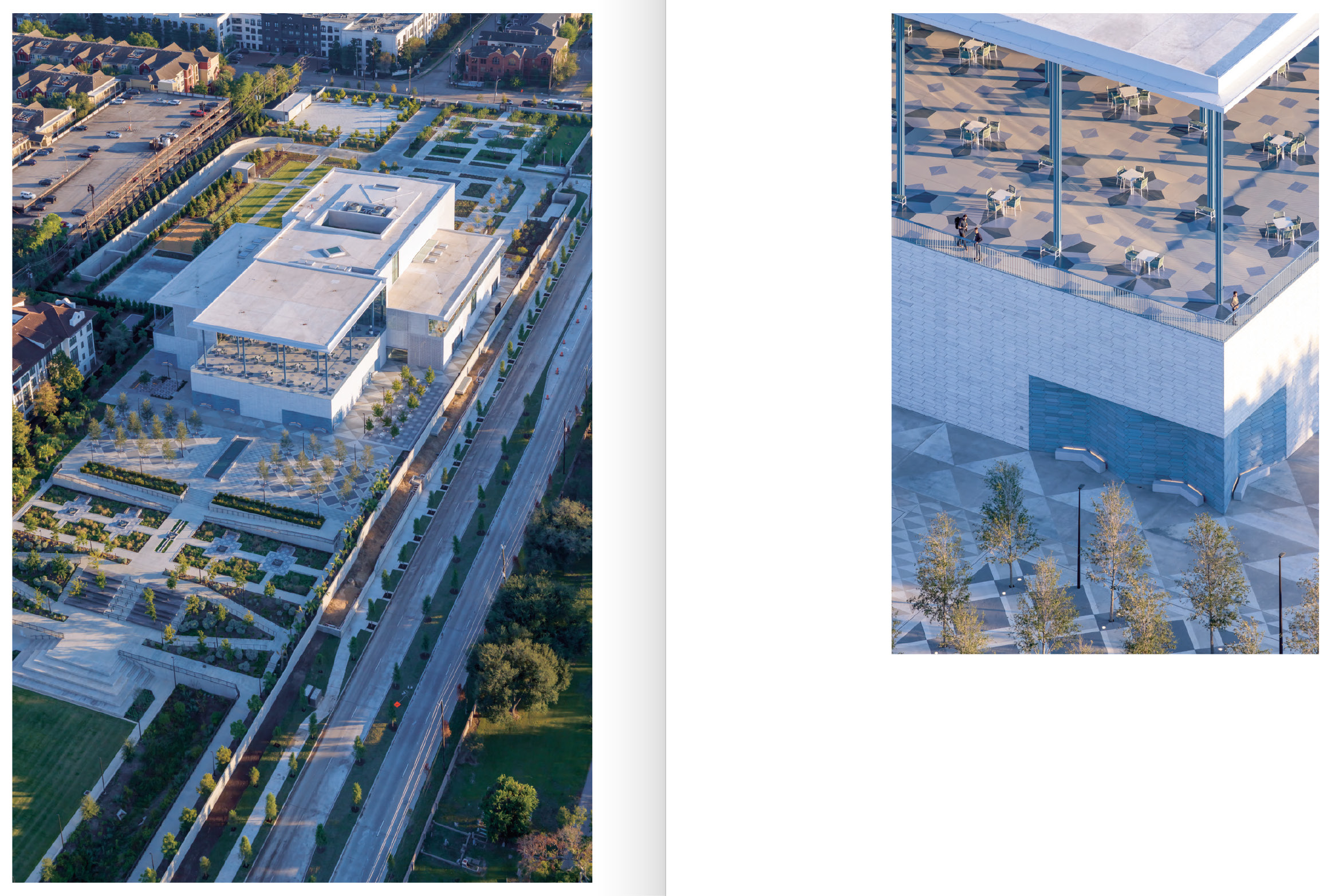
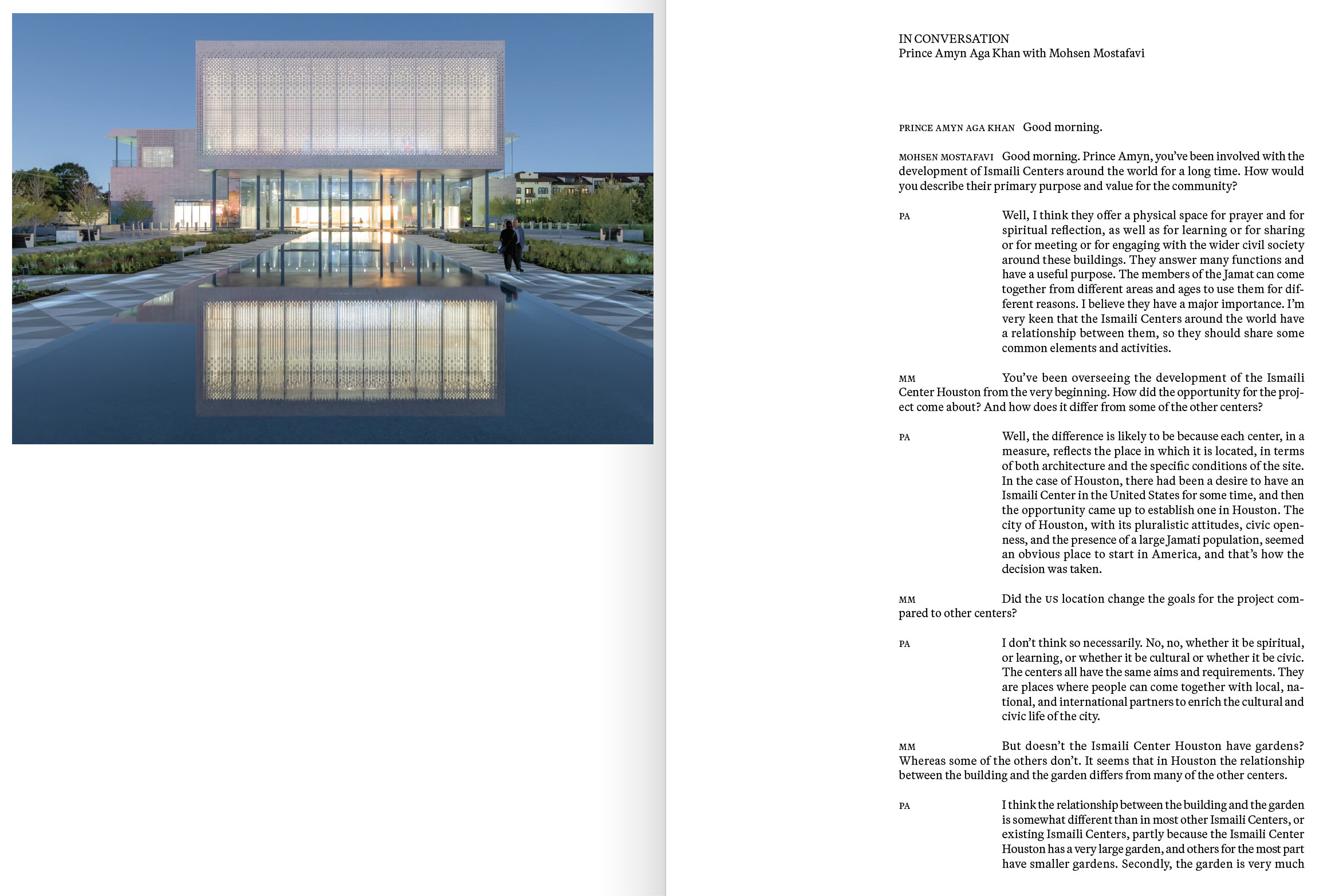
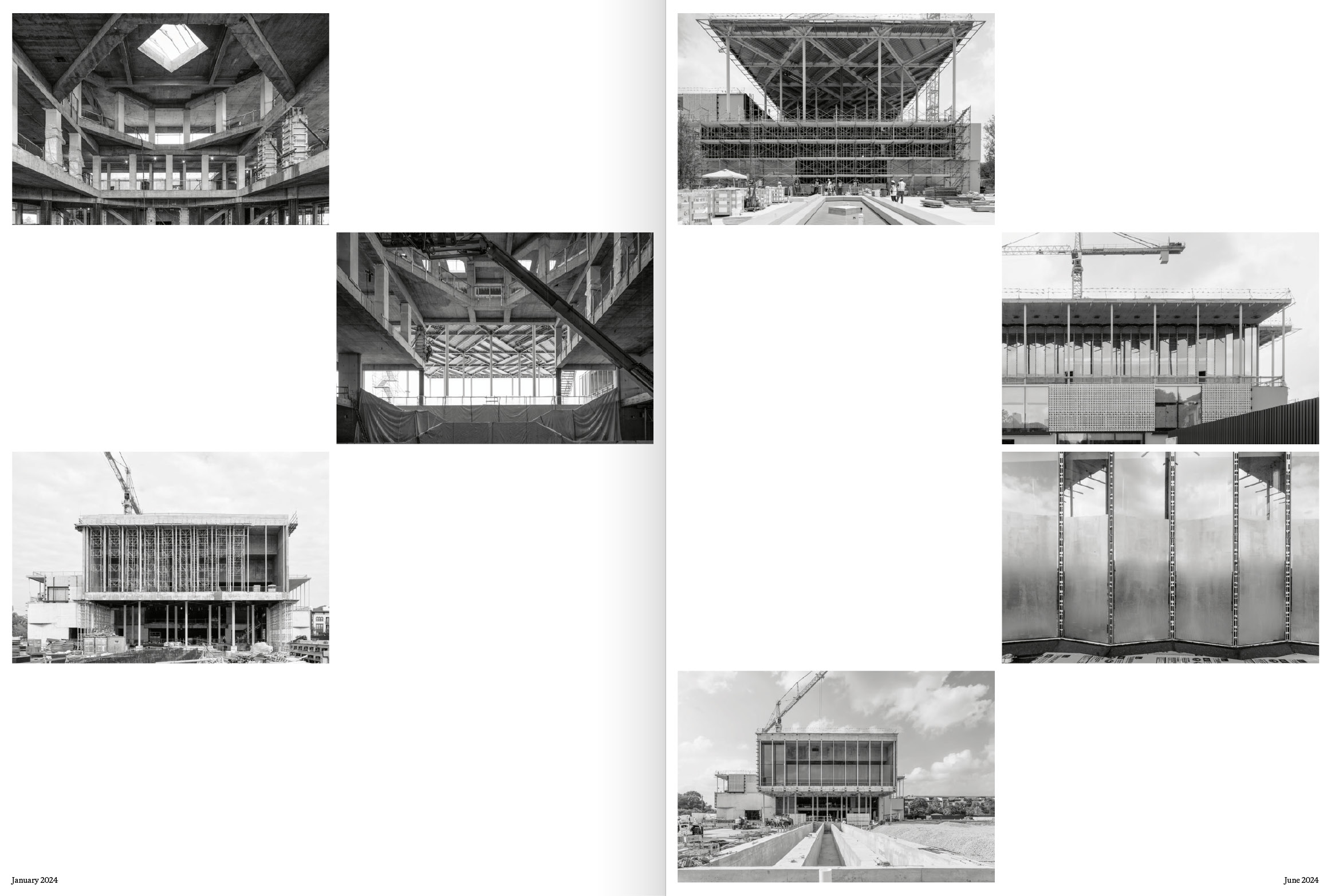
The Ismaili Center Houston is a new landmark of architecture and culture. Edited by Mohsen Mostafavi and richly illustrated with photographs by Iwan Baan and Salina Kassam, this volume provides a rare look into the making of a unique project. Essays by the primary designers of the building and its gardens, Farshid Moussavi, Hanif Kara, and Thomas L. Woltz, describe and elucidate the processes and ideas that shaped their proposals. Other essays by Azim Nanji and James L. Wescoat Jr. contextualize the contributions of the Ismaili community and the origins of the Islamic garden. Finally, an interview with Prince Amyn Aga Khan sheds light on the transformative role played by architecture as an agent of social interaction and dialogue across diverse communities. At a time when cultural understanding feels increasingly important, the Ismaili Center Houston stands as a powerful reminder of what design can achieve: a space where tradition and innovation meet, and where a community opens its doors to the wider world.
Table of Contents
Betweenness: On Architecture’s Many Relations
Mohsen Mostafavi
Photo Essay I
Iwan Baan
The Architecture
Farshid Moussavi
The Structure
Hanif Kara
The Garden
Thomas L. Woltz
The Drawings
The Ismailis
Azim Nanji
Seeking Wisdom in Islamic Gardens
James L. Wescoat Jr.
In Conversation
Prince Amyn Aga Khan with Mohsen Mostafavi
Photo Essay II
Salina Kassam
Author's Biographies
Prince Amyn Aga Khan
Prince Amyn Aga Khan is the brother of Prince Karim Aga Khan IV. He spent his early childhood in East Africa and Cairo. He graduated from Harvard University with a BA with honors, magna cum laude, and with an MA in comparative literature.
Prince Amyn has had a long involvement with the Aga Khan Development Network (AKDN) and is a member of the boards of the Aga Khan Fund for Economic Development (AKFED), the Aga Khan Foundation, and the Aga Khan Trust for Culture. For many years, Prince Amyn has sustained active relations with museums, cultural institutions, and programs, including The Museum of Modern Art and The Metropolitan Museum of Art, both in New York City, and the Musée du Louvre in Paris. He has been a member of the Acquisitions Committee of the Louvre and is on the Council of the Friends of the Louvre.
Moreover, Prince Amyn has been consistently involved in the work of institutions designed to save heritage and, among other things, is active in transforming heritage buildings. Since 1997, he has been a trustee of the World Monuments Fund (WMF) and is on its International Advisory Committee. He is currently president of WMF (France). For many years, he served as a member of the board of the Silk Road Project launched by Yo-Yo Ma. Prince Amyn has deep interests in architecture and the arts, especially music. He played a major role in overseeing the design and construction of the Ismaili Center Houston in collaboration with his late brother.
Iwan Baan
Iwan Baan is a Dutch architecture and documentary photographer based in Amsterdam. His photographs document the life of architecture around the world, from informal and traditional housing structures to the growth of megacities, and how individuals, communities, and societies reappropriate their built environment to make it their own. Baan has worked with leading architects and architecture studios such as Rem Koolhaas / OMA, Herzog & de Meuron, SANAA, Zaha Hadid, Steven Holl, and Tatiana Bilbao. His images are regularly published in newspapers and magazines such as The New York Times, The Wall Street Journal, The New Yorker, Domus, and Architectural Digest. Baan has authored or collaborated on many books, including Rome – Las Vegas: Bread and Circuses (Lars Müller Publishers, 2024), African Modernism: The Architecture of Independence (Park Books, 2015/2022), Momentum of Light (coauthored with Francis Kéré, 2021), and Brasilia – Chandigarh: Living with Modernity (2010/2023). Baan’s work has been exhibited internationally, including a touring retrospective exhibition launched at the Vitra Design Museum, Weil am Rhein, in 2023–24.
Hanif Kara
Professor Hanif Kara OBE, FREng, FIStructE., FICE has over forty years of expertise in design, innovation, and strategic leadership. As cofounder and design director of the firm AKT II, he has led many acclaimed projects, including the Bloomberg Headquarters Building in London, the Heydar Aliyev Center in Baku, and the forthcoming Zayed National Museum in Abu Dhabi. For over thirty years, Kara has shaped AKT II’s design ethos, contributing to more than 400 design awards, including four projects honored with the RIBA Stirling Prize. Beyond practice, he is committed to education and public engagement, serving as Professor in Practice at Harvard University Graduate School of Design and advising institutions such as the Royal Institute of British Architects (RIBA) and the Design Museum in London. Moreover, Kara continues to serve as design advocate for the Mayor of London. He was awarded the Soane Medal in 2024, the British Council for Offices Presidents Award in 2024, The London Design Medal in 2023, and the Fazlur R. Khan Lifetime Achievement Award in 2022.
Salina Kassam
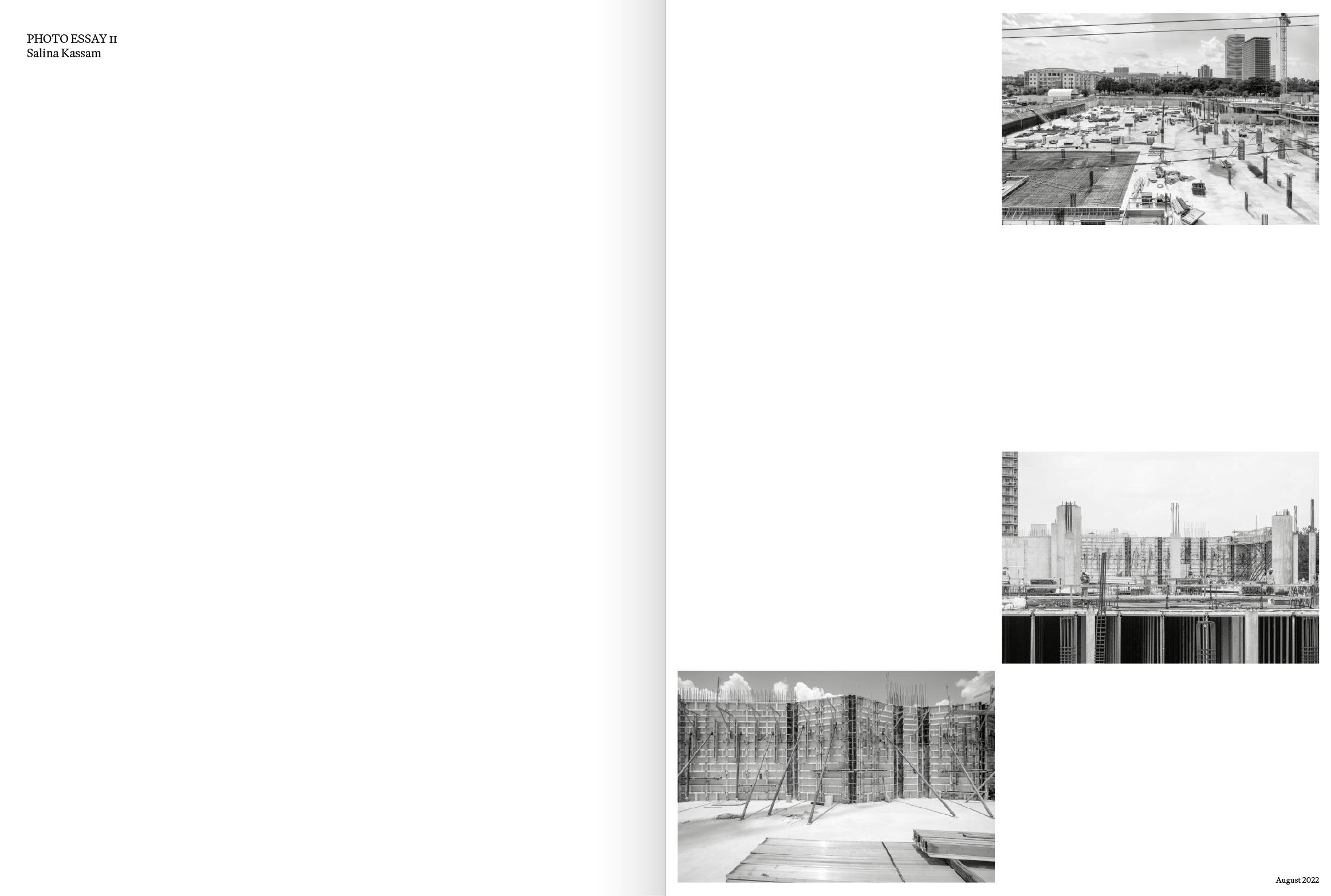
Salina Kassam is an architectural photographer based in Toronto. While her practice includes interiors and architecture, she has a special interest in narrating how buildings are constructed. Kassam studied documentary photography at the International Center of Photography in New York and brings a storytelling perspective to her images. Kassam’s niche canters around illustrating the building process, highlighting the creative journey of constructing architecture that often goes untold. To her, these moments are raw and magical. The stories continue long after the buildings are “born,” and her photographs show us how humans interact and celebrate these spaces. Salina Kassam was the recipient of the Canadian Architect Photo Award of Excellence in 2020 and 2023. Her work has been exhibited widely and was recognized as a finalist in the Architizer A+ Awards “Architecture Photo and Video” category, as well as by the LOOP Design Awards and the Architecture MasterPrize.
Mohsen Mostafavi
Mohsen Mostafavi is the Alexander and Victoria Wiley Professor of Design and Harvard University Distinguished Service Professor. He served as dean of the Graduate School of Design at Harvard University from 2008 to 2019. An architect and educator, his work focuses on modes and processes of urbanization and on the interface between technology and aesthetics. Mostafavi is the author, editor, and coeditor of many books, including On Weathering: The Life of Buildings in Time (1993), Surface Architecture (2002), Ecological Urbanism (2010, translated into Chinese, Portuguese, and Spanish), In the Life of Cities (2012), Architecture Is Life (2013), Nicholas Hawksmoor: London Churches (2015), Portman’s America & Other Speculations (2017), Ethics of the Urban: The City and the Spaces of the Political (2017), Sharing Tokyo: Artifice and the Social World (2023), Revitalizing Japan: Architecture, Urbanization, and Degrowth (2024), and The Color Black: Antinomies of a Color in Architecture and Art (2024).
Farshid Moussavi
Farshid Moussavi OBE RA is an internationally acclaimed architect, writer, and educator. She is the founder and principal of the practice Farshid Moussavi Architecture (FMA), which is responsible for award-winning projects around the world, including the Museum of Contemporary Art in Cleveland, Ohio. Her largest project to date, the Ismaili Center Houston in Texas, was recently completed in 2025. Moussavi’s ideas and work are at the forefront of critical debate about architecture. She has authored four books, most recently Architecture and Micropolitics (Park Books, 2022), which sets out her vision for architecture as a form of practice that is responsive rather than deterministic. Moussavi has pursued teaching in parallel to practice for more than thirty years, seeing it as an opportunity for developing critical thinking on subjects like the design of social housing or approaches to adaptive reuse. She is currently Professor in Practice of Architecture at Harvard University Graduate School of Design.
Azim Nanji
Azim Nanji currently serves on the Board of Trustees at the Aga Khan University (International) in the United Kingdom, and as a member of the Board of Directors of the Global Centre for Pluralism in Ottawa, Ontario. He was senior associate director of the Abbasi Program in Islamic Studies at Stanford University and has also served as director of the Institute of Ismaili Studies in London and as a member of the Steering Committee and Master Jury of the Aga Khan Award for Architecture.
James L. Wescoat Jr.
James L. Wescoat Jr. is the Aga Khan Professor Emeritus of Landscape Architecture and Geography at the Massachusetts Institute of Technology. He taught seminars at MIT on “Islamic Architecture and the Environment,” “Islamic Gardens and Geographies,” “Water in Planning, Policy, and Design,” and “Disaster-Resilient Design,” as well as various landscape design workshops in India, Tajikistan, and the United States. For much of his career, Wescoat has focused on the small-scale historical waterworks of Mughal gardens and of cities in India and Pakistan. He led the Smithsonian Institution’s project “Garden, City, and Empire: The Historical Geography of Mughal Lahore.” He continues to research and write about the historical water systems in Agra, Delhi, Lahore, and Kashmir.
Thomas L. Woltz
Thomas L. Woltz is the senior principal of Nelson Byrd Woltz Landscape Architects (NBW), where he has led a research-driven design practice for over twenty-five years at the intersection of culture and ecology. Under his leadership, the firm integrates scientists and historians into its collaborative process, shaping landscapes that reveal layered histories and advance environmental stewardship. NBW’s work spans thirty US states and twelve countries. Woltz holds master’s degrees in landscape architecture and architecture from the University of Virginia and has received numerous honors, including ASLA Fellow, the Land for People Award, and Design Innovator of the Year by the Wall Street Journal Magazine.