Description
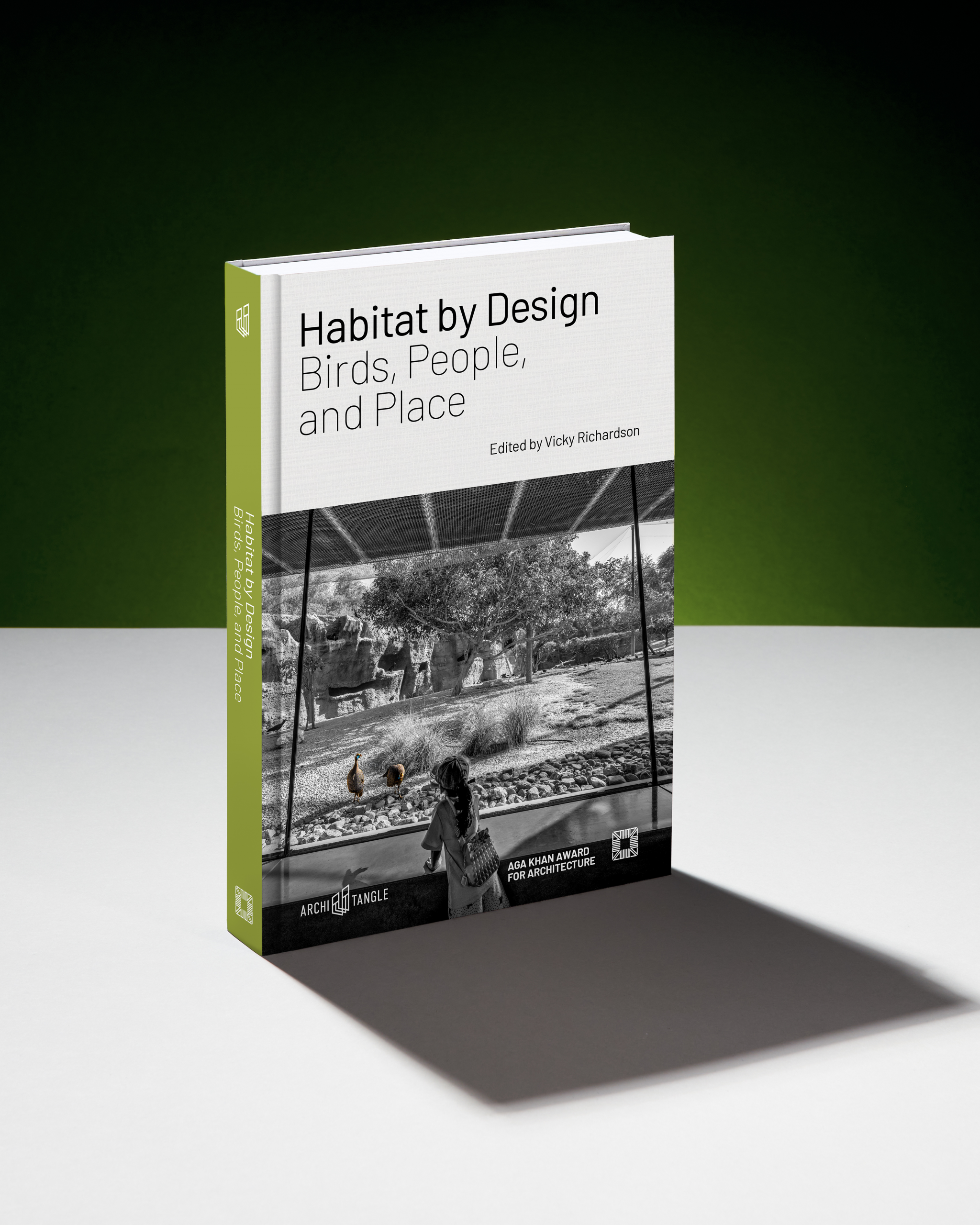
Habitat by Design: Birds, People, and Place, edited by Vicky Richardson, brings together leading voices from architecture, ecology, art, history, and science to explore the ever-changing relationship between people, birds, and the landscapes they share. Through essays, interviews, and visual narratives, the book expands on the themes of architecture and ecology, environmental thinking, and the coexistence of human and non-human species, while asking how design can restore and sustain habitats amidst rapid urbanisation.
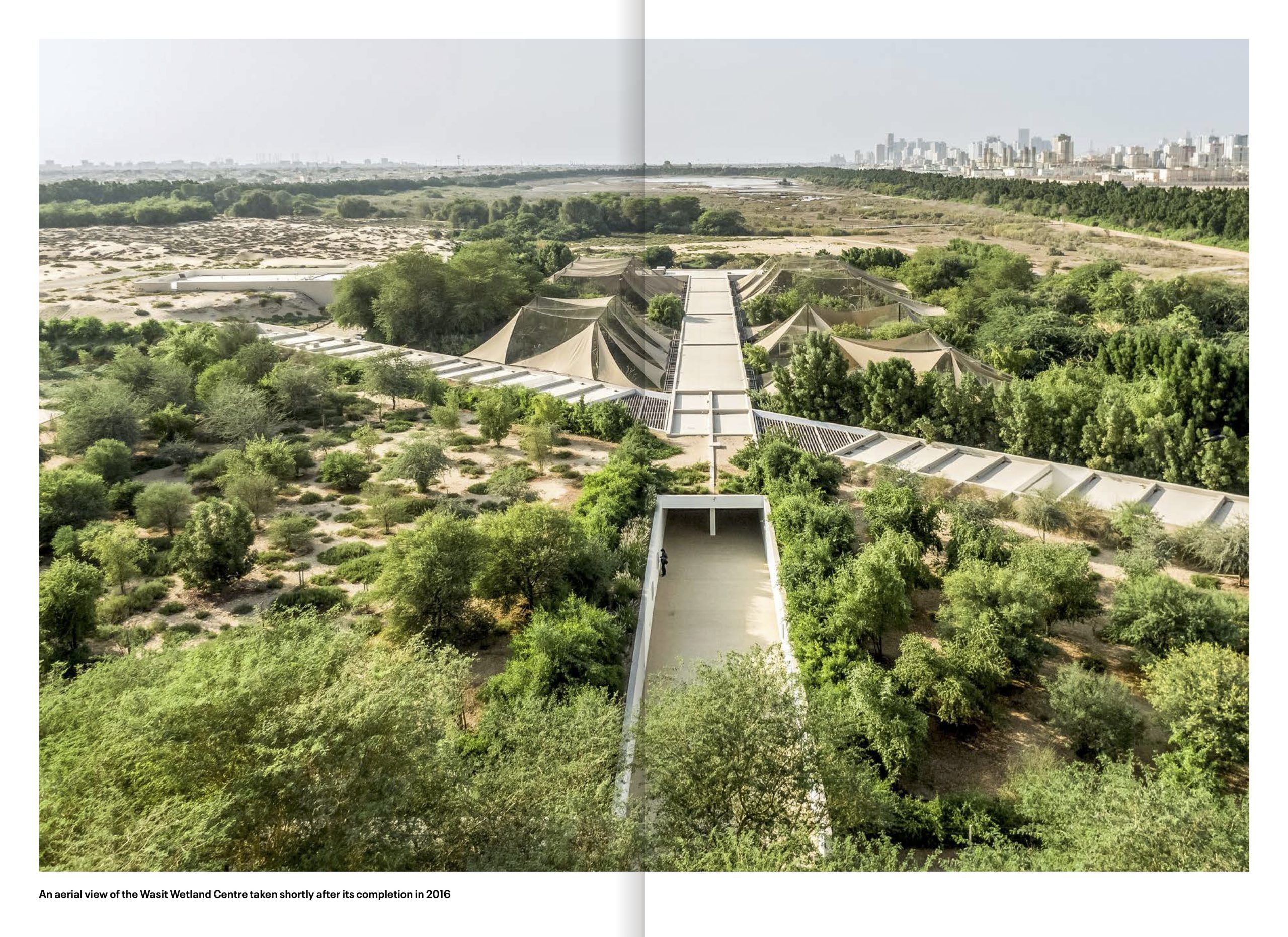
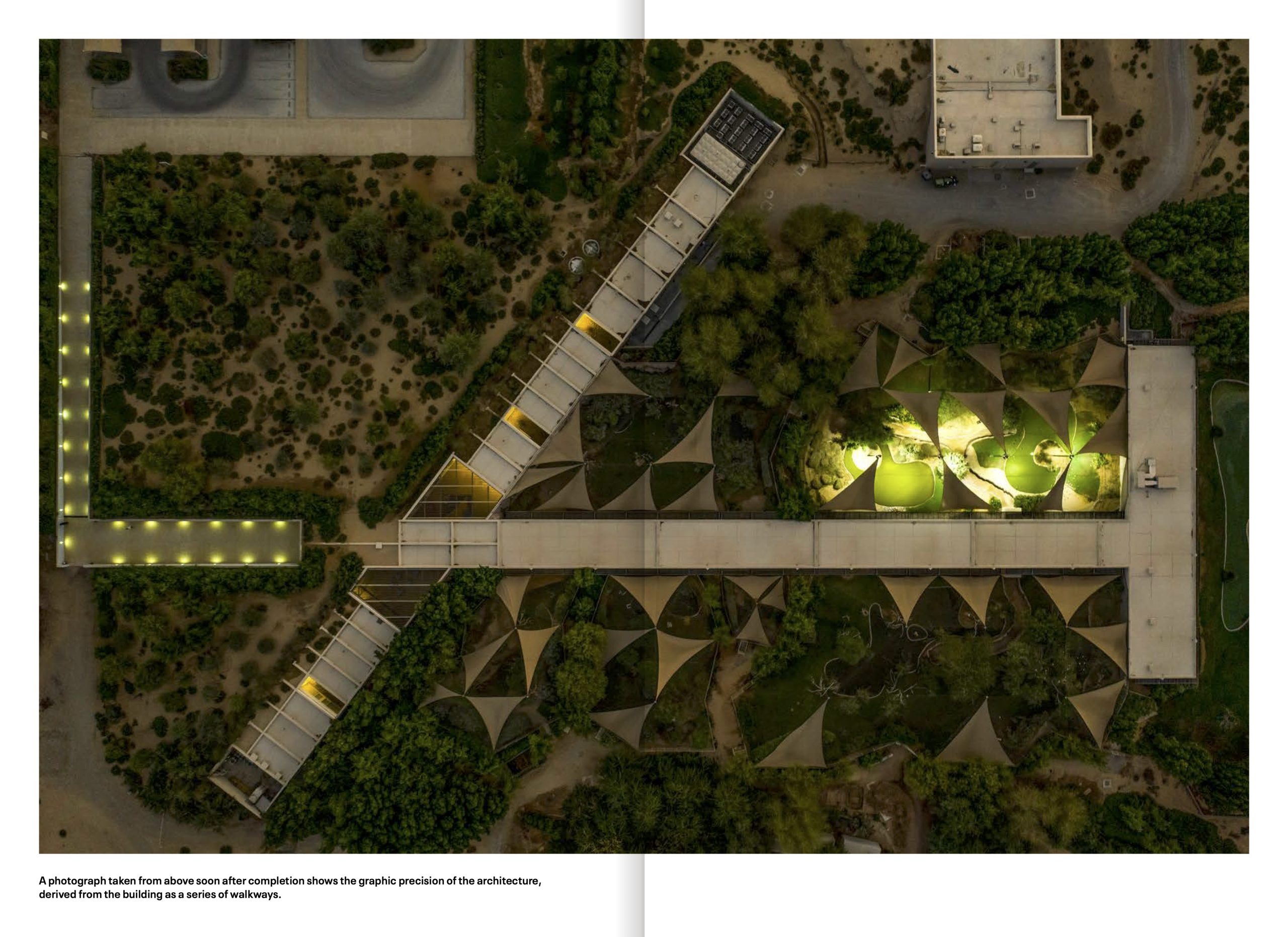
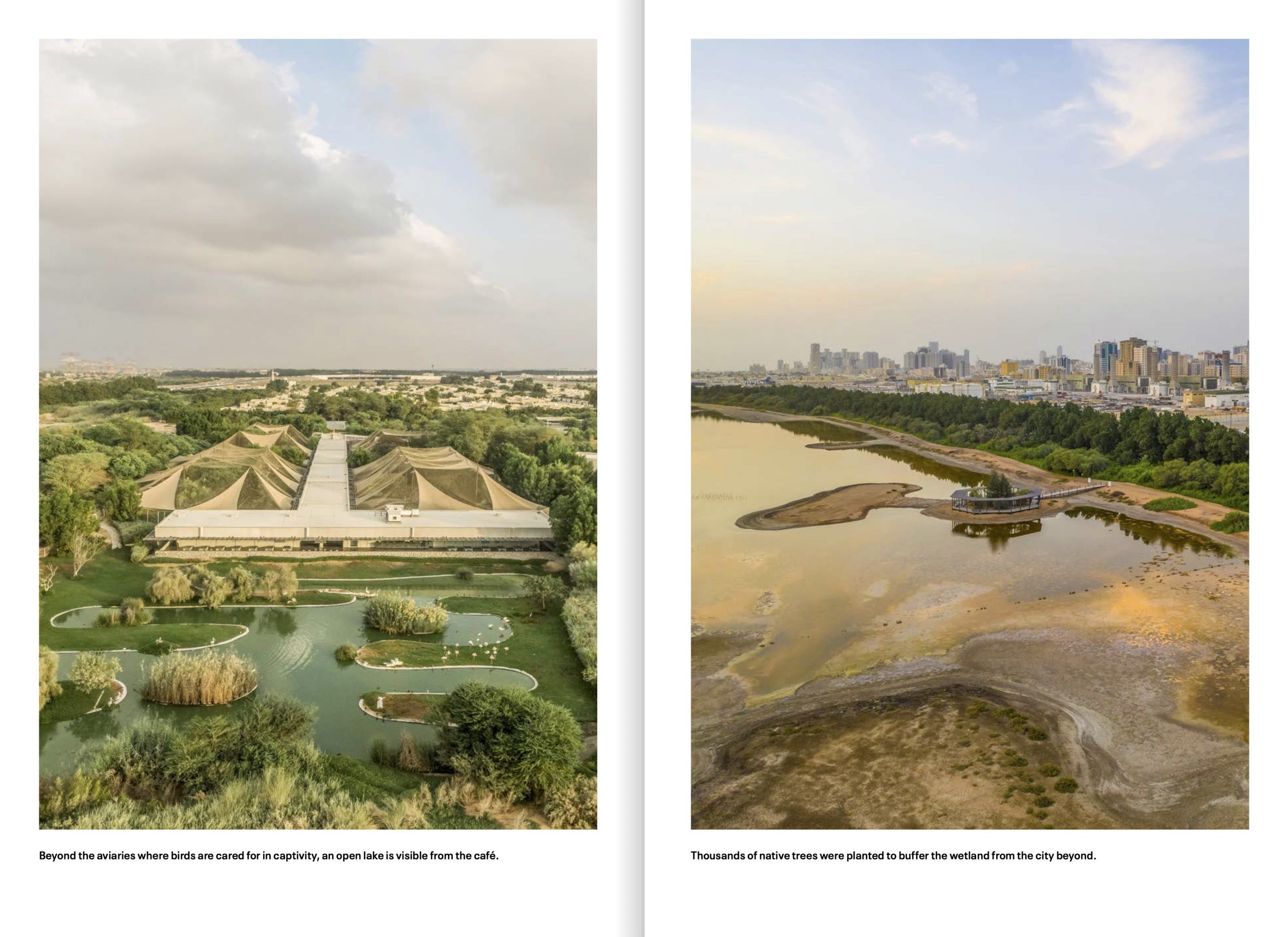
The starting point for these reflections is the Wasit Wetland Centre in Sharjah by X Architects, the first project in the United Arab Emirates to receive the Aga Khan Award for Architecture. Built on the site of a former landfill, Wasit has transformed a degraded landscape into a thriving wetland for resident and migratory birds, while creating a place where people can reconnect with nature. Building on this transformation, the volume explores how nature and the human-made, often regarded as opposing realms, can be closely intertwined.
Habitat by Design offers a multidisciplinary perspective on the role of design in shaping more resilient environments and a more thoughtful relationship between birds, people, and place.
Details
| Weight | 755 g |
|---|---|
| Dimensions | 245 × 170 × 30 mm |
| Contributions by | With contributions by Azza Aboualam, Ahmed Al Ali, Farah Al Qasimi, Lulu Almana, Ahmed and Rashid bin Shabib, Farrokh Derakhshani, Gareth Doherty, Farid Esmaeil, Andrew Farnsworth, Sophie Hosking, Kevin Mitchell, Lucas Morin, Vicky Richardson, Fatin Samara, Catherine du Toit, James L. Wescoat Jr., and X Architects. |
| Art Director | Julia Wagner, grafikanstalt |
| Language | English |
| Features | Hardback, full color, stich bound, embossed |
| Size | 17 x 24,5 cm, 6.7 x 9.6 in |
| Illustrations | 115 illustrations |
| Page count | 224 pages |
| Publication Date | September 2026 |
| ISBN | 978-3-96680-051-8 |
Sicherheits- und Herstellerinformationen / Manufacturer and Safety Information
Hersteller/Manufacturer: ArchiTangle GmbH
Adresse/Address: Meierottostr. 1, 10719 Berlin, Germany
Email: gpsr@architangle.com
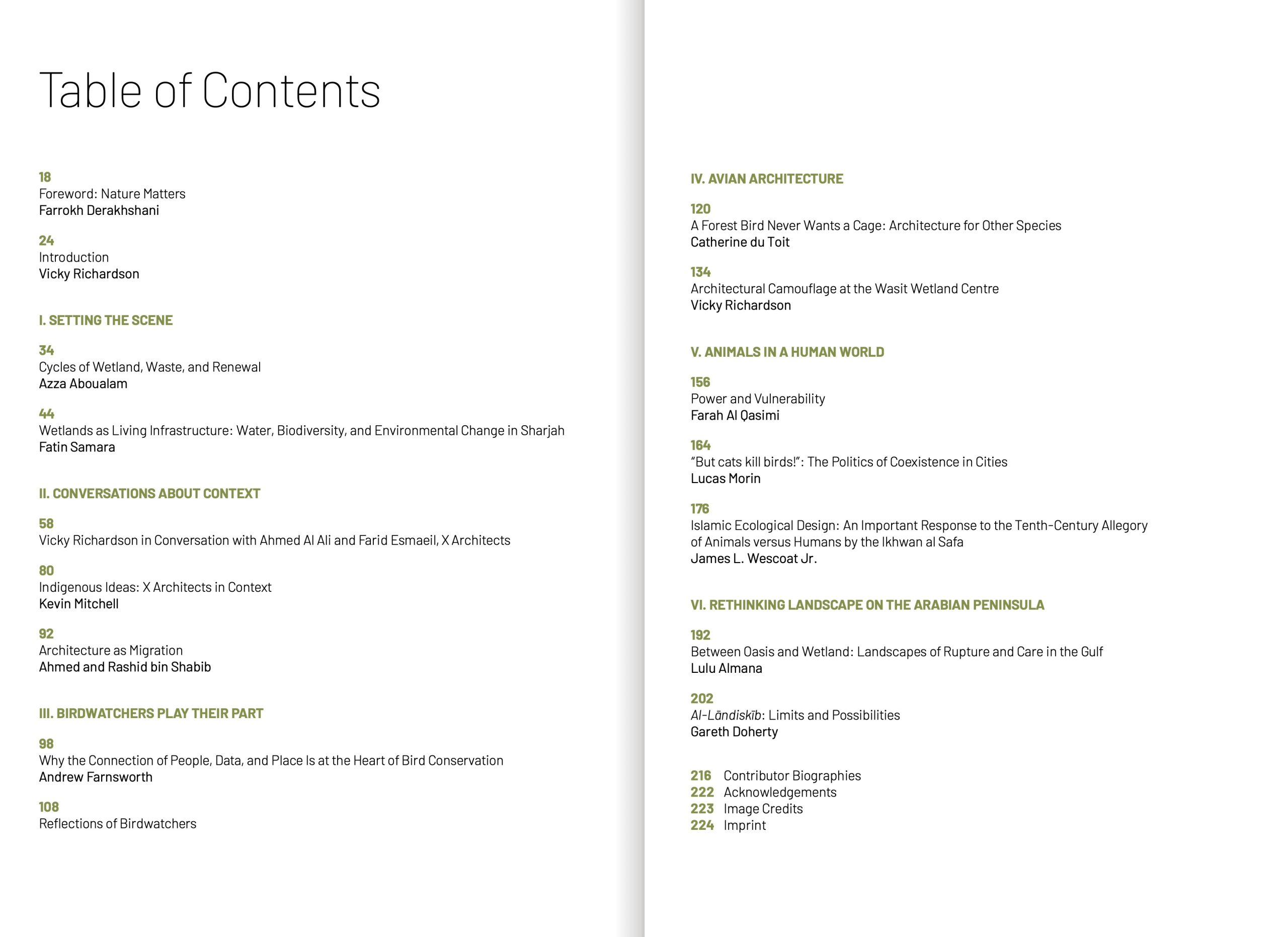
Table of Contents
Foreword: Nature Matters
Farrokh Derakhshani
Introduction
Vicky Richardson
I. SETTING THE SCENE
Cycles of Wetland, Waste, and Renewal
Azza Aboualam
Wetlands as Living Infrastructure: Water, Biodiversity, and Environmental Change in Sharjah
Fatin Samara
II. CONVERSATIONS ABOUT CONTEXT
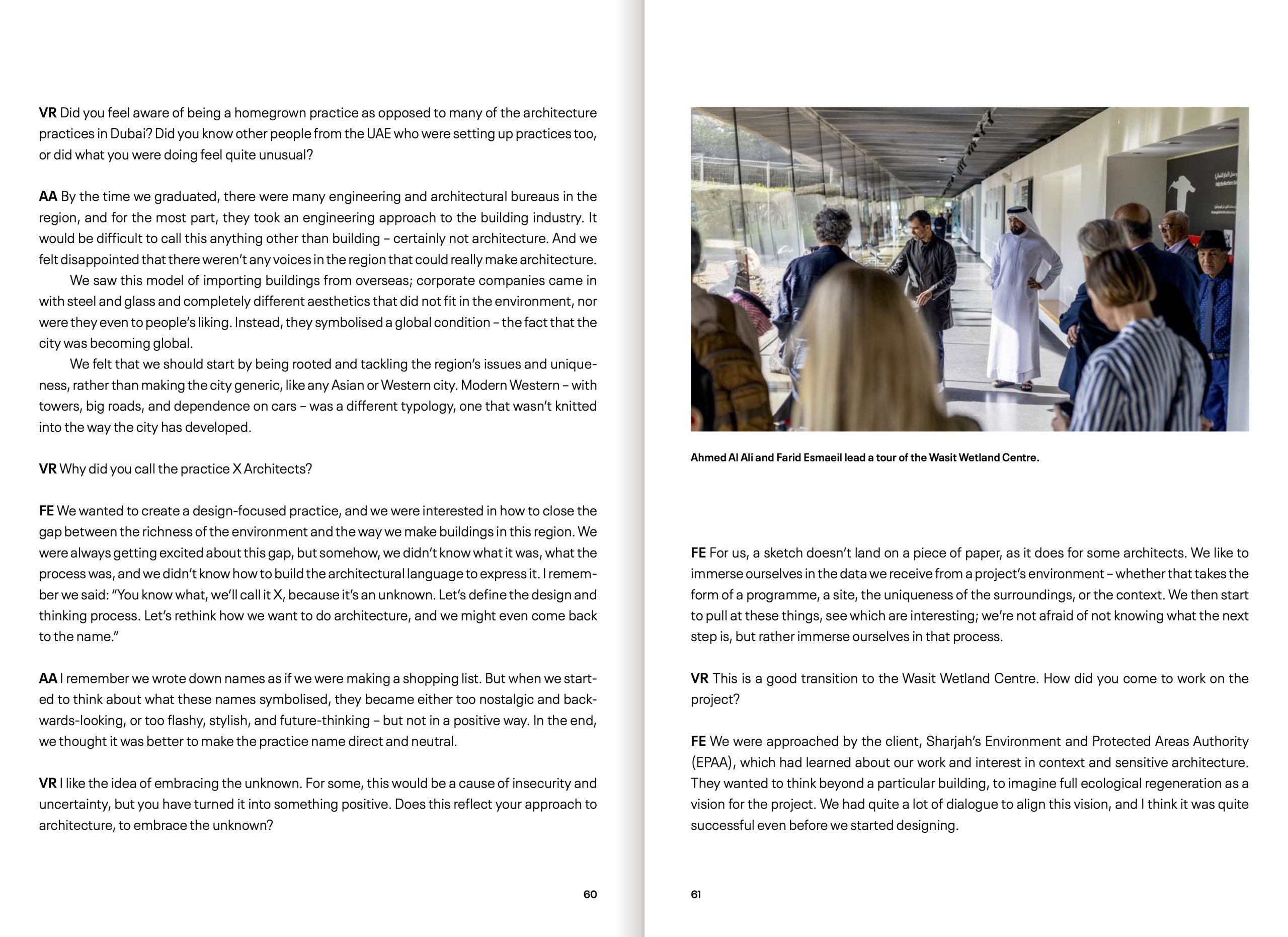
Vicky Richardson in Conversation with Ahmed Al Ali and Farid Esmaeil, X Architects
Indigenous Ideas: X Architects in Context
Kevin Mitchell
Architecture as Migration
Ahmed and Rashid bin Shabib
III. BIRDWATCHERS PLAY THEIR PART
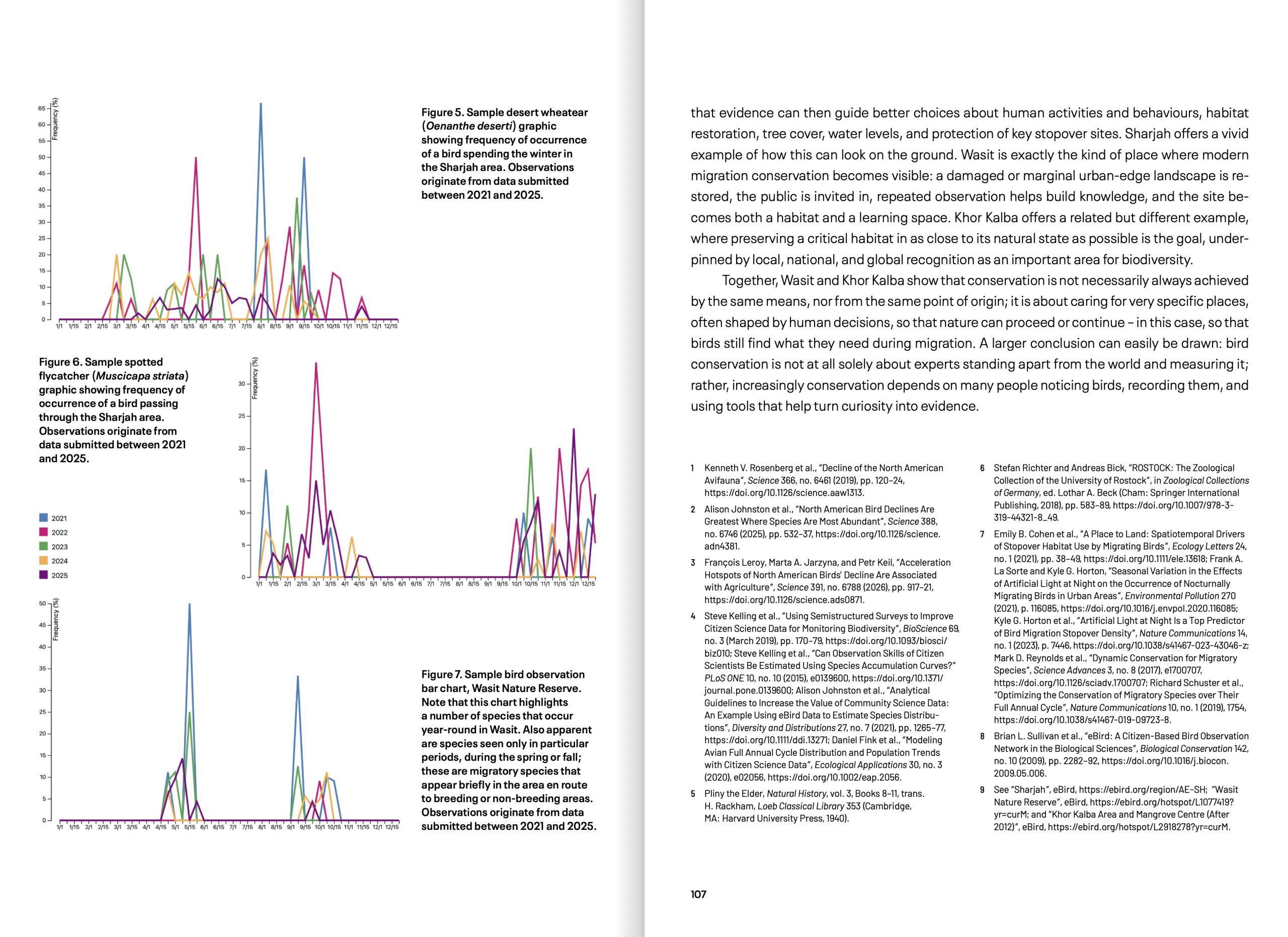
Why the Connection of People, Data, and Place Is at the Heart of Bird Conservation
Andrew Farnsworth
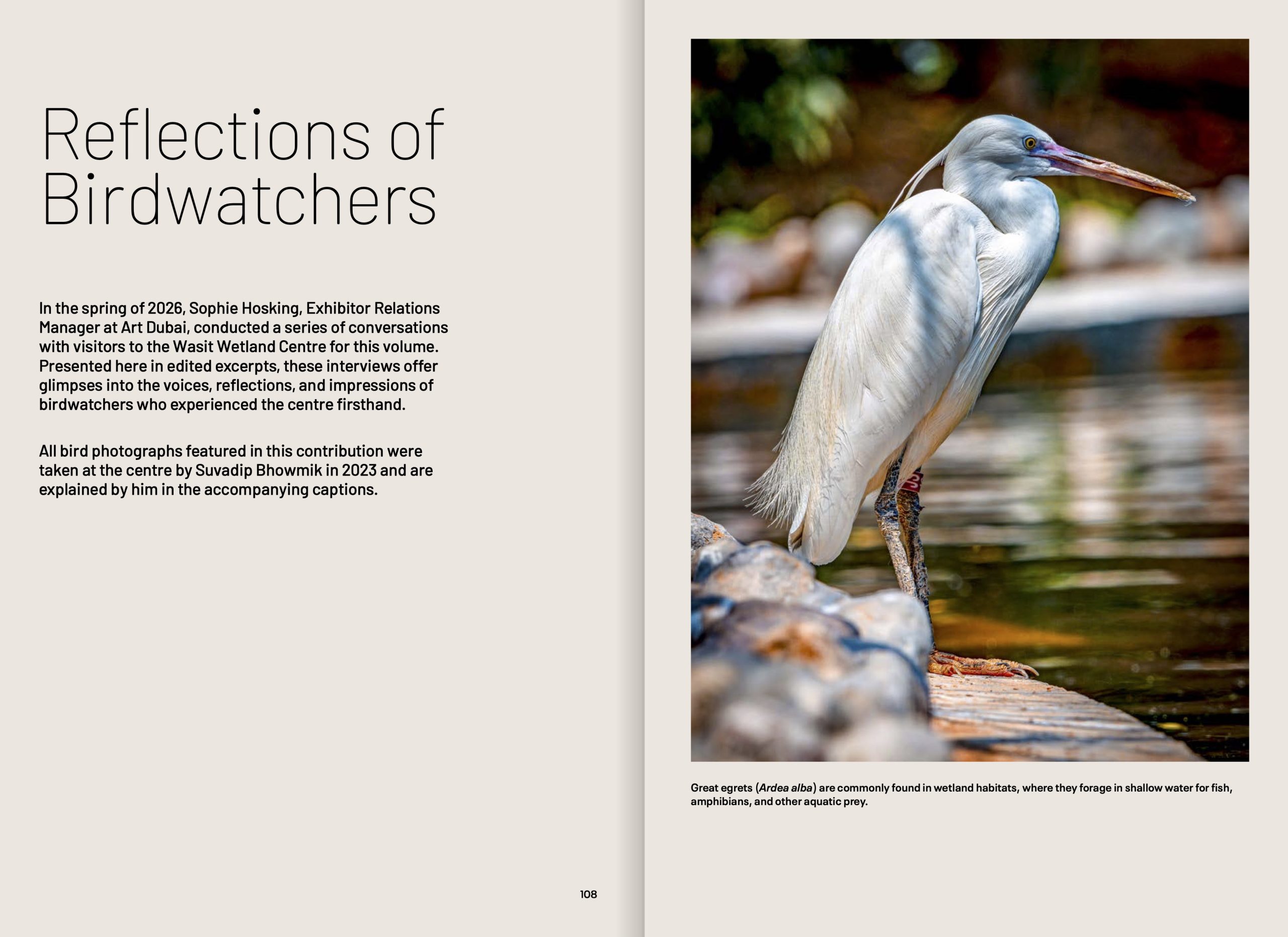
Reflections of Birdwatchers
IV. AVIAN ARCHITECTURE
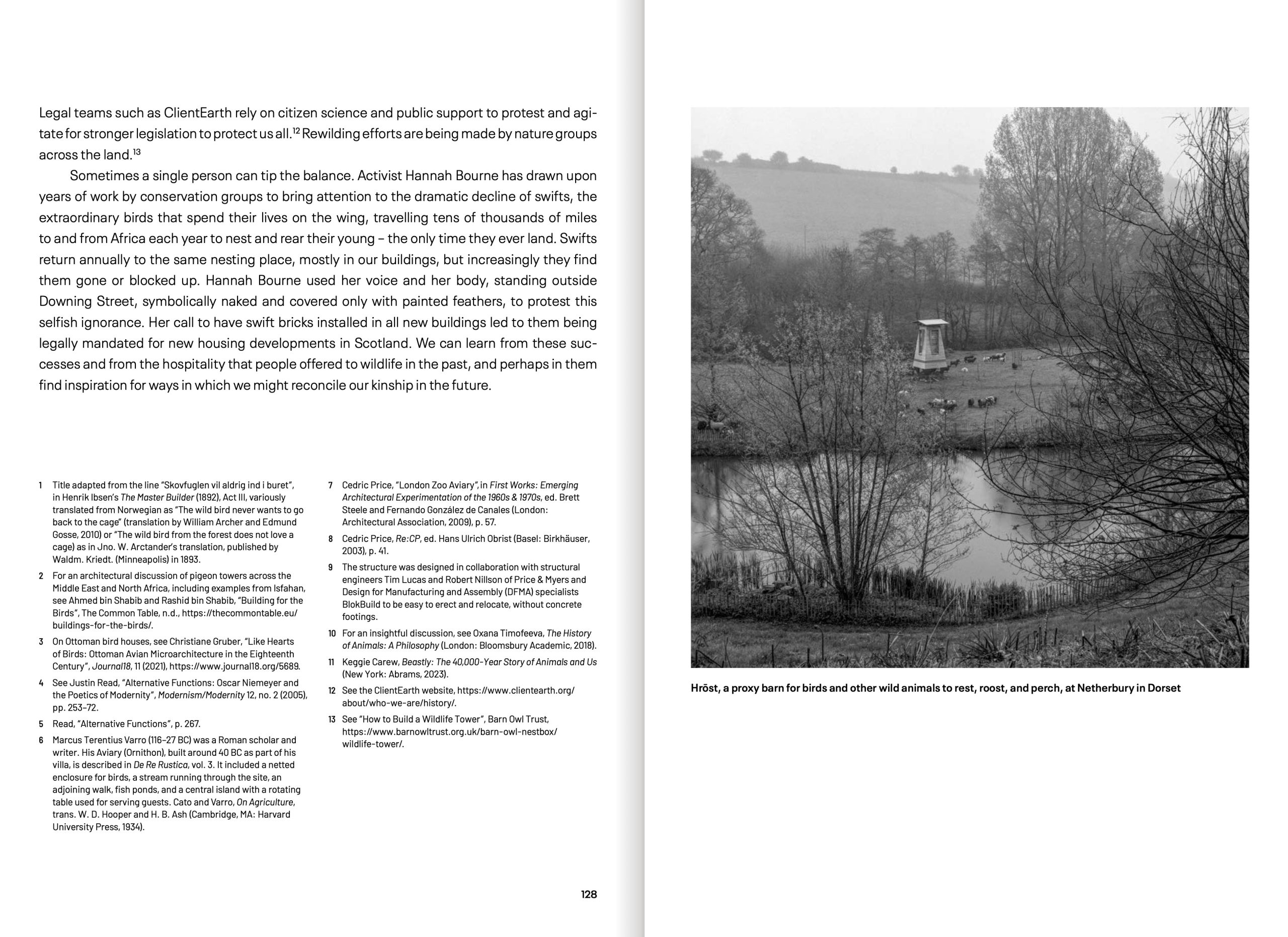
A Forest Bird Never Wants a Cage: Architecture for Other Species
Catherine du Toit
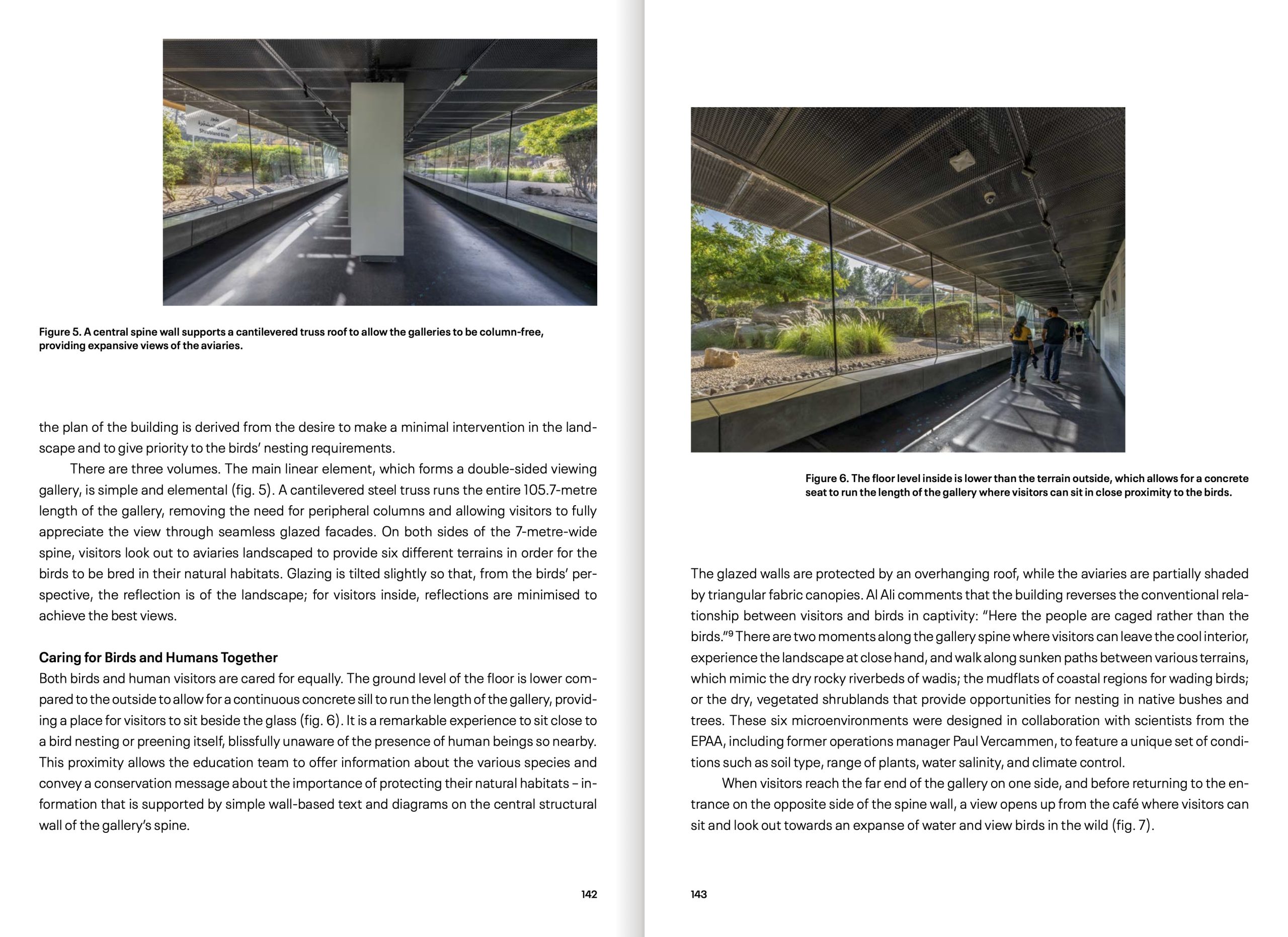
Architectural Camouflage at the Wasit Wetland Centre
Vicky Richardson
V. ANIMALS IN A HUMAN WORLD
Power and Vulnerability
Farah Al Qasimi
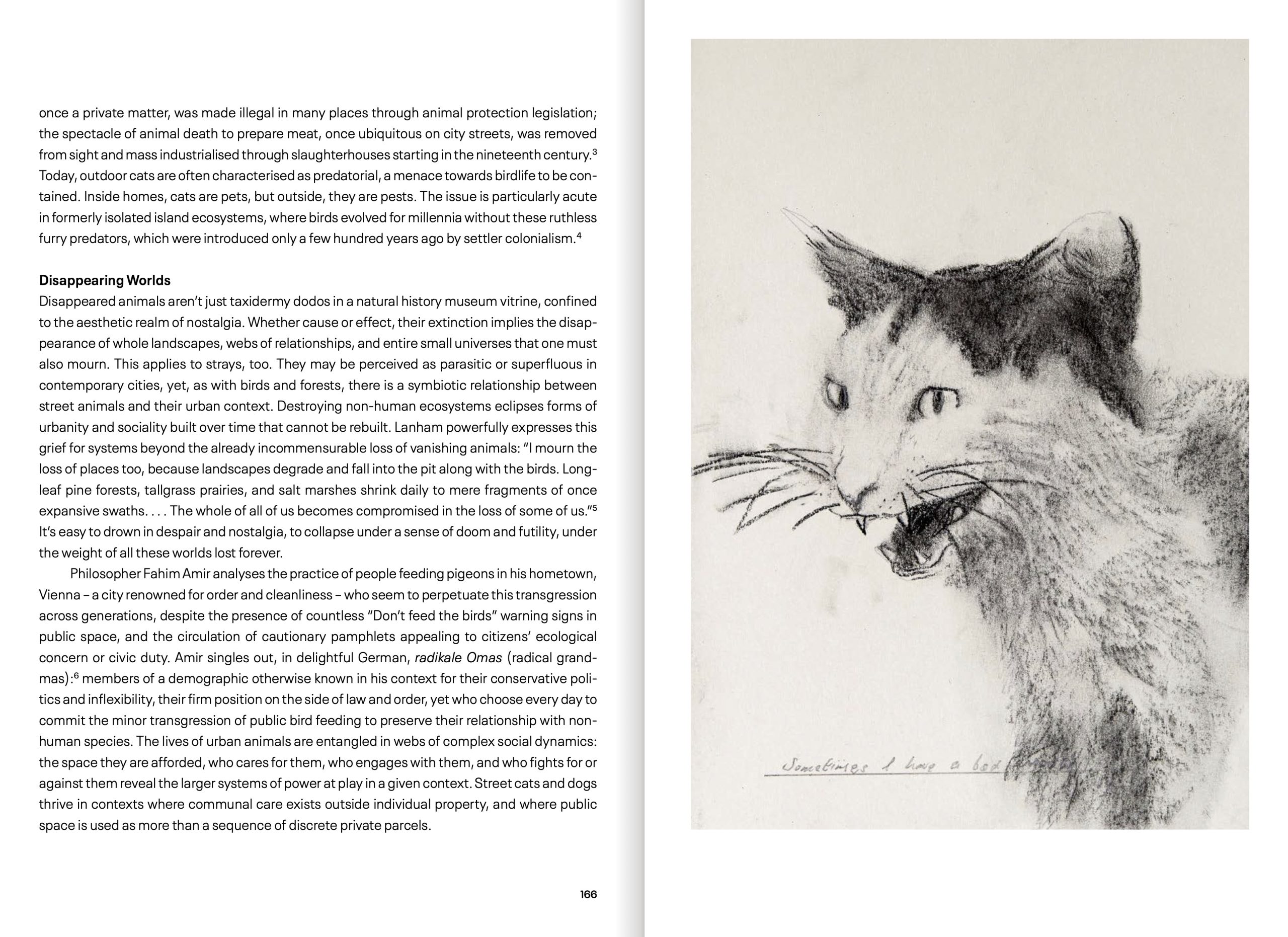
“But cats kill birds!”: The Politics of Coexistence in Cities
Lucas Morin
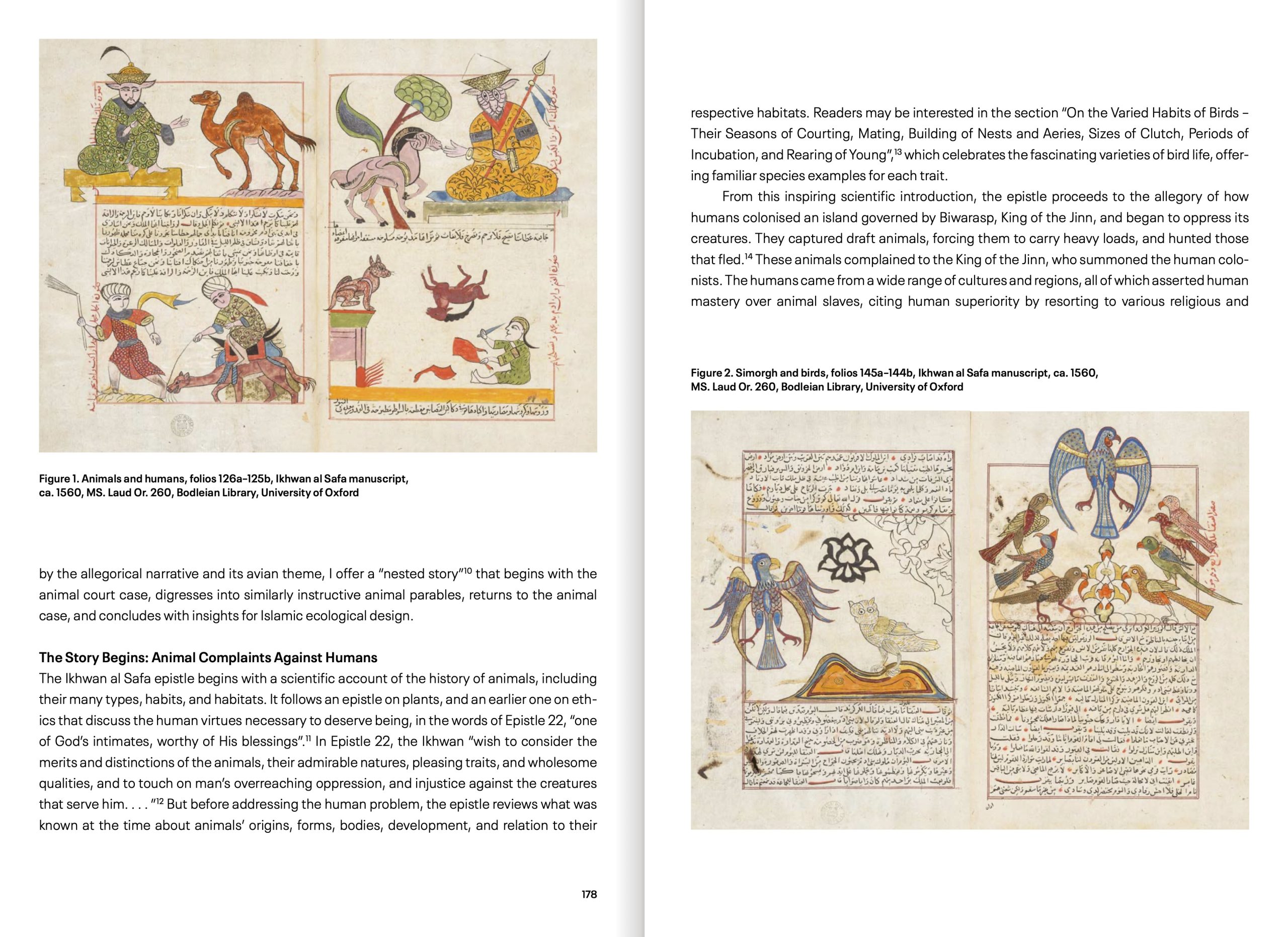
Islamic Ecological Design: An Important Response to the Tenth-Century Allegory of Animals versus Humans by the Ikhwan al Safa
James L. Wescoat Jr.
VI. RETHINKING LANDSCAPE ON THE ARABIAN PENINSULA
Between Oasis and Wetland: Landscapes of Rupture and Care in the Gulf
Lulu Almana
Al-Lāndiskīb: Limits and Possibilities
Gareth Doherty
Author's Biographies
The editor
Vicky Richardson is a curator and writer, and founder of the curatorial office Pick Up Architecture. Richardson previously served as head of architecture and Drue Heinz Curator at the Royal Academy of Arts (2021–24), where she curated exhibitions including Herzog & de Meuron (2023) and Light Lines: The Architectural Photographs of Hélène Binet (2021). As director of architecture, design, and fashion at the British Council (2010–16), Richardson acted as commissioner for six editions of the British Pavilion at the Biennale Architettura di Venezia. She was previously editor of Blueprint magazine (2004–10) and continues to write for publications including Gagosian Quarterly, RIBA Journal, and Wallpaper*. She holds a BArch (Hons) in architecture and an MA in early modern history, and is an Honorary Fellow of the Royal Institute of British Architects (RIBA).
The contributors
Azza Aboualam is an Emirati architect and educator. She is an assistant professor at the College of Arts and Creative Enterprises at Zayed University, Dubai, and a co-founder and director of research at Holesum Studio, an interdisciplinary architecture and design practice based in New York and Sharjah. She co-founded the studio in 2021, a few years after graduating from the Yale School of Architecture. Aboualam is the first Emirati female curator of the National Pavilion UAE for the 19th International Architecture Exhibition – La Biennale di Venezia 2025.
Ahmed Al Ali is an Emirati architect, researcher, and entrepreneur whose practice sits at the intersection of contemporary design, Arab identity, and regional heritage. He is founding partner and chairman of X Architects. Al Ali has led significant civic, cultural, and religious commissions across the Gulf, advancing a contemporary language of Gulf architecture that is contextually grounded. He is also an active voice in international architectural discourse as a published architect, lecturer, and guest critic.
Farah Al Qasimi makes photographs, films, and music. Often working with large-scale vinyl imagery and a multiplicity of photographic prints and screens, she is interested in the internet and its hierarchies of information and emotion. Al Qasimi loves the complexity of storytelling and value-building in children’s cartoons, and many of her video works include primary narrators who are anthropomorphised. Her work is in the collections of The Museum of Modern Art, New York; Tate Modern, London; and the Guggenheim New York and Abu Dhabi.
Lulu Almana is a Saudi landscape architect working at the intersection of research, public space, and urban regeneration. She is the co-founder, with Sara Al Omran, of Maghras: A Farm for Experimentation (est. 2024), a farm-based research and community platform in Al Ahsa, Saudi Arabia. With over twelve years of experience in London, Istanbul, and Abu Dhabi, her work operates across scales, from strategic urban frameworks to site-based ecological interventions. She brings a translocal perspective to her work, informed by international practice and grounded in regional ecologies. Almana is the founder and principal of Lulu Almana Studio, where she designs regenerative landscapes and leads research-driven initiatives across the Gulf.
Ahmed and Rashid bin Shabib are urbanists and researchers. For more than a decade, their magazine Brownbook has explored cities across the Middle East and North Africa, with more than a million copies in circulation. They co-authored the publication Anatomy of Sabkhas: Preserving Sustainable Salt Flats for the National Pavilion UAE, which won the Golden Lion award for Best National Participation at the Biennale Architettura in 2021. They have lectured and taught at the Architectural Association, New York University, Zayed University, and Boisbuchet. Ahmed and Rashid are graduates of the University of Oxford, where they specialised in urbanism, and Rashid holds a PhD in architecture from the University of Cambridge.
Farrokh Derakhshani is the director of the Aga Khan Award for Architecture and has been associated with the Award since 1982. Derakhshani trained as an architect and planner at the National University of Iran and later continued his studies at the School of Architecture in Paris (UP1). His main field of specialisation is the contemporary architecture of Muslim societies. Derakhshani lectures widely; has organised, participated in, and juried numerous international seminars, exhibitions, colloquia, workshops, and competitions; and has collaborated on a large variety of architecture-related publications. He is an International Fellow of the Royal Institute of British Architects (IntFRIBA) and an Honorary Fellow of the Royal Architectural Institute of Canada (Hon. FRAIC).
Gareth Doherty is an associate professor in the Department of Architecture at the National University of Singapore. Doherty’s work explores the intersection of environmental sustainability, social equity, and design. He adopts a human-centred approach to landscape architecture, integrating ethnographic fieldwork and participatory design methods to better understand and shape the relationships between people and their environments. His research challenges conventional design practices by foregrounding issues of identity, cultural space, and the human dimensions of climate change. He is the author of Landscape Fieldwork: How Engaging the World Can Change Design (University of Virginia Press, 2025) and Paradoxes of Green: Landscapes of a City-State (University of California Press, 2017).
Farid Esmaeil is founding partner and principal of X Architects, the Dubai-based practice he co-founded with Ahmed Al Ali in 2003 after graduating from the American University of Sharjah. His work examines the relationship between contemporary society, urban identity, and the built environment, weaving cultural narratives with environmental sensitivity. His portfolio includes award-winning projects such as the Wasit Wetland Centre in Sharjah, the As Safiyyah Museum & Park in Medina, and the adaptive reuse of Bait Mohammed Bin Khalifa in Al Ain. A recipient of the Aga Khan Award for Architecture, Esmaeil has exhibited his work widely, published internationally, and served as an active lecturer on sustainability, regionalism, and contextual design.
Andrew Farnsworth is a visiting scientist at Cornell Lab of Ornithology’s Center for Avian Population Studies, where he studies bird migration using sight, sound, weather radar, thermal imaging, acoustic monitoring, and machine learning. He holds a PhD in ecology and evolutionary biology from Cornell University. A birder from the age of five in his native Rye, New York, he has helped grow BirdCast since 1999, translating radar data into near-realtime migration forecasts and conservation action, in particular, reducing light pollution and collision hazards for nocturnal migrants. He has worked closely on many other Cornell Lab projects, including eBird and Merlin; led birding tours for Victor Emanuel Nature Tours; and supported conservation groups including Fundación Jocotoco, NYC Bird Alliance, and Rainforest Trust. Farnsworth is also a musician, when time permits, and a trustee for the Earle Brown Music Foundation.
Sophie Hosking is an architectural historian and arts professional based in Dubai, where she has lived on and off for more than a decade. Having spent much of her life abroad – in Chile, India, New Zealand, the United States, the United Kingdom, and now the United Arab Emirates – she brings a global perspective shaped by diverse cultural contexts and histories, which continues to inform her work. She currently serves as Exhibitor Relations Manager at Art Dubai and holds degrees in architectural history from the University of Edinburgh and The Bartlett School of Architecture, University College London. Her research and professional interests centre on contemporary art, architecture, and design in the Gulf and their relationship to broader global cultural conversations, combining research, writing, and cultural programming.
Kevin Mitchell is a Trustees Professor and a professor of architecture at the American University of Sharjah, where he has served as a faculty member and in a number of administrative positions since 1999. Leadership roles have included Director of Design Foundations, Associate Dean, Vice Provost for Undergraduate Affairs and Instruction, and Interim Provost and Chancellor. His teaching has been recognised with awards from the American Institute of Architects and the university. Mitchell’s teaching and scholarship – disseminated in numerous publications, conference presentations, symposia, and lectures – seek to advance architecture by engaging with issues related to the growth of the Gulf region. Beyond the university, Mitchell has contributed to advancing architecture and design through activities including service on the founding editorial board of the International Journal of Islamic Architecture, the National Pavilion UAE – La Biennale di Venezia curator selection committee, and the UAE Ministry of Culture’s Modern Heritage Technical Committee.
Lucas Morin is a senior curator at the Jameel Arts Centre in Dubai. His work engages with animals, infrastructure, cities, and the politics of emotions. He was previously a curator at Bétonsalon – Centre d’art et de recherche in Paris and worked at the Sursock Museum in Beirut. He graduated from Sciences Po Paris and Université Paris-Sorbonne. He loves books, cats, and public transport systems. In 2024, Morin curated Three Tired Tigers at Jameel Arts Centre, a contemporary art exhibition on animals in urban environments.
Fatin Samara is a full professor of environmental sciences at the American University of Sharjah, United Arab Emirates, and deputy director of the Energy, Water and Sustainable Environment Research Center (EWSERC). Her work focuses on environmental chemistry and ecosystem sustainability in arid regions, examining legacy and emerging contaminants in air, water, soil, and marine environments. Through interdisciplinary research that integrates environmental monitoring, chemical analysis, and spatial assessment, Samara investigates the relationships between natural systems, urban development, and environmental resilience. Her research contributes to sustainability planning, environmental protection, and climate adaptation across the Gulf and wider MENA region.
Catherine du Toit was born and raised in Cape Town. Her attentiveness to the natural world largely springs from her relationship with her grandfather, president of the Botanical Society and chairman of the National Botanic Gardens of South Africa while she was being raised. Working intimately with Peter Thomas for four decades, du Toit is an architect and co-founder of 51 architecture; a practice known for its considered material collaborations with analogue and digital artisans and architectures for other species. She taught for a decade at the Architectural Association, followed by a term as its president from 2022 to 2025.
James L. Wescoat Jr. is the Aga Khan Professor Emeritus of Landscape Architecture and Geography at the Massachusetts Institute of Technology. He has taught seminars at MIT on Islamic architecture and the environment; Islamic gardens and geographies; water in planning, policy, and design; and disaster-resilient design, as well as various landscape design workshops in India, Tajikistan, and the United States. For much of his career, Wescoat has focused on the small-scale historical waterworks of Mughal gardens and of cities in India and Pakistan. He led the Smithsonian Institution’s project “Garden, City, and Empire: The Historical Geography of Mughal Lahore”. Wescoat continues to research and write about the historical water systems in Agra, Delhi, Lahore, and Kashmir.
Shipping
Quick and affordable delivery cost for this product:
| Germany: | Free |
| Europe (EU): | EUR 8,90 per order (or free on any order of 2+ books) |
| Europe (Non-EU): | EUR 13,90 per order |
| World: | EUR 18,90 for this item |